
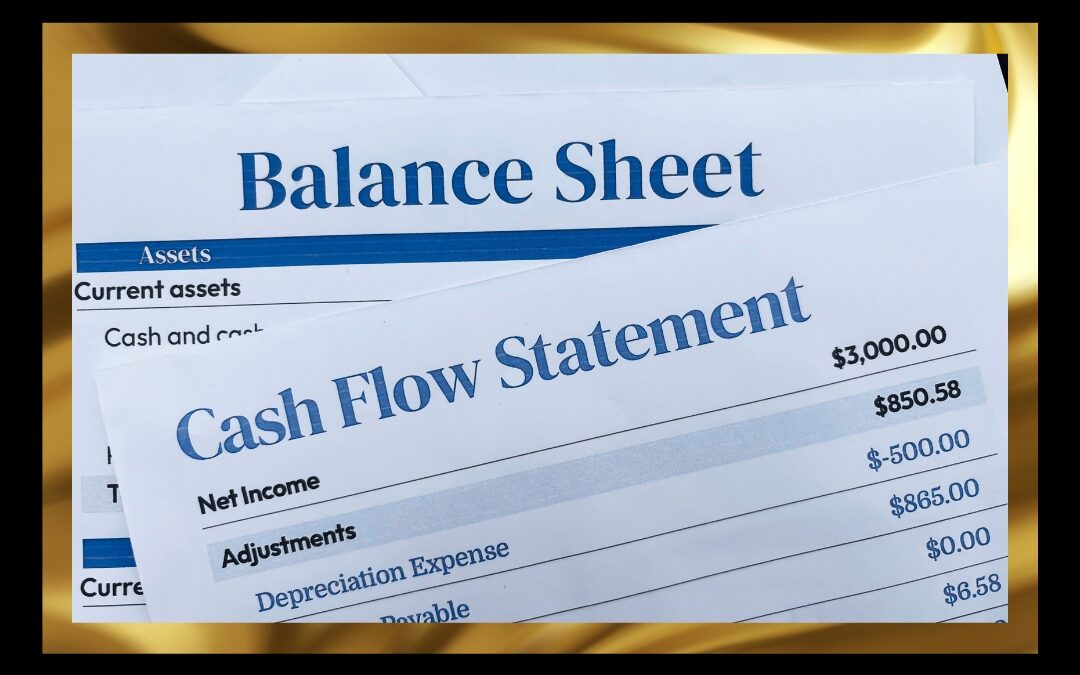
The Business Scoreboard Explained
Article #1 FOCUS:
Understanding Profit, Cash Flow and the Balance Sheet
Many business owners review their financial reports each month. But many quietly admit something uncomfortable. They look at the numbers and still feel unsure what they mean. If that sounds familiar, you are not alone.
Financial reports are often presented in technical language. Without clear explanation, the numbers feel confusing rather than helpful.
Yet those reports are your business scoreboard.
Just like a scoreboard in sport, your financial reports tell you three critical things:
- How your business performed
- Where you stand financially today
- What resources you still have available
Three reports form this scoreboard:
- The Profit and Loss Statement
- The Cash Flow Statement
- The Balance Sheet
Understanding these reports brings clarity. It helps remove nasty surprises and gives you greater control over your business.
Key Takeaways
- Financial reports act as the scoreboard for your business performance.
- The Profit and Loss Statement shows whether your business made a profit during a period.
- The Cash Flow Statement shows where money entered and left your bank account.
- The Balance Sheet shows what the business owns and owes at a specific date.
- A business can appear profitable but still struggle with cash flow.
- Understanding these reports helps business owners spot risks early and make informed decisions.
Why Understanding Your Financial Reports Matters
Running a business without understanding your financial reports is like exploring a goldfield without a map.
You may discover success.
But you may also run into problems you never saw coming.
According to the Australian Bureau of Statistics, more than 2.7 million businesses operate in Australia, with new businesses starting and others exiting each year. Financial awareness helps businesses navigate this changing environment with confidence.
Government guidance consistently stresses the importance of monitoring financial performance.
For example, business.gov.au recommends regularly reviewing your financial statements to identify trends, low margins, debt levels and cash flow pressure.
When owners understand their numbers, they can make better decisions and avoid unexpected financial stress.
The Profit and Loss Statement: Measuring Business Performance
The Profit and Loss Statement (P&L) measures your business performance over a period of time.
It answers one simple question:
Did the business make money during this period?
According to business.gov.au, a profit and loss statement shows income, expenses and the resulting profit or loss over a specific time frame.
The formula is simple.
Income – Expenses = Profit (or Loss)
What the Profit and Loss Statement Shows
Your P&L helps answer important questions:
- Are sales growing or declining?
- Are expenses increasing too quickly?
- Are products or services priced correctly?
- Are overheads under control?
Think of the P&L as the performance report for your gold mine.
It shows whether the work you are doing is actually producing value.
But there is an important limitation.
Profit does not always equal cash in the bank.
The Profit Trap: Why Profit Does Not Always Mean Cash
Many business owners assume that profit automatically means money in the bank.
In reality, the two can be very different.
A business may record strong sales but still experience cash shortages.
This happens when money is tied up in:
- unpaid customer invoices
- inventory or stock
- loan repayments
- tax obligations
The Australian Taxation Office emphasises that managing cash flow helps businesses ensure they have enough money available to pay bills, wages and tax obligations when they fall due.
For example, a business might record a large sale today.
But if the customer pays in 60 days, the cash is not available immediately.
That is why the Cash Flow Statement is so important.
The Cash Flow Statement: Tracking the Movement of Money
The Cash Flow Statement shows where money flows into and out of your business.
It answers this question:
Where did the money actually go?
According to business.gov.au, a cash flow statement tracks cash movements and helps businesses forecast shortages or surpluses.
This report includes:
- cash received from customers
- payments to suppliers
- wages and operating expenses
- loan repayments
- tax payments
- equipment purchases
Think of the cash flow statement as the trail of gold coins moving through your business.
While the P&L measures profitability, the cash flow statement measures financial stability.
The “Busy but Broke” Problem
Many growing businesses experience a frustrating cycle.
Sales increase.
Work becomes busier.
Staff numbers grow.
Expenses rise.
Yet the bank balance remains tight.
This situation is often called “busy but broke.”
It occurs when sales grow faster than cash collections.
Slow-paying customers, rising costs, or large purchases can quickly reduce available cash.
Monitoring cash flow helps owners identify problems early and take action before financial pressure builds.
The Balance Sheet: Your Business Wealth Snapshot
The Balance Sheet provides a snapshot of your business at a specific moment.
It answers a different question:
What does the business own, and what does it owe?
According to business.gov.au, a balance sheet summarises assets, liabilities and equity to show the financial position of a business.
The balance sheet follows one simple equation.
Assets = Liabilities + Equity
What the Business Owns = Assets
Assets represent things of value owned by the business.
Examples include:
- cash in the bank
- equipment and vehicles
- inventory
- money owed by customers
These assets are the resources used to generate revenue.
Liabilities: What the Business Owes
Liabilities are financial obligations.
Common examples include:
- business loans
- supplier bills
- unpaid tax obligations
- wages payable
Liabilities are normal in business, but high debt levels increase financial risk.
Equity: The Owner’s Stake
Equity represents the owner’s share in the business.
It reflects what would remain if all debts were paid.
Equity grows when the business earns profit and retains those earnings.
Equity falls when losses occur or when owners withdraw significant funds.
The balance sheet therefore provides a clear picture of the financial strength and stability of the business.
How These Three Reports Work Together
Each financial report answers a different question.
Together, they form the complete business scoreboard.
Profit and Loss Statement
Shows whether the business generated profit over time.
Cash Flow Statement
Shows how cash moved through the business.
Balance Sheet
Shows the financial position at a specific point in time.
Changes in one report often affect the others.
For example:
- Profit increases equity on the balance sheet.
- Purchasing equipment reduces cash but increases assets.
- Taking out a loan increases both cash and liabilities.
Understanding how these reports interact helps business owners make smarter financial decisions.
Turning Financial Reports into Business Insight
Financial reports are not just historical records.
They are decision-making tools.
Guidance from business.gov.au recommends reviewing financial statements regularly to identify unusual trends, rising costs, or cash flow pressure.
Once business owners understand their financial scoreboard, they can answer critical questions such as:
- Can we afford to hire another employee?
- Is our pricing covering our costs?
- Are customers paying too slowly?
- Is the business carrying too much debt?
Clear financial information turns guesswork into informed decision-making.
Laying the Groundwork for Future Growth
Understanding profit, cash flow and the balance sheet is the first step toward financial control.
Without this foundation, it is difficult to measure performance or plan for growth.
This article forms the starting point for the From Groundwork to Gold1 business success series.
Future articles will explore:
- the most important financial KPIs for business owners
- how to identify early warning signs in your numbers
- how to forecast future cash flow
- how to use financial data to scale your business
But before building the next stage, every successful business needs solid foundations.
Understanding your scoreboard provides exactly that.
Ready to Gain Clarity Over Your Numbers?
Many business owners feel uncertain when reviewing financial reports.
That uncertainty is completely normal.
Financial reports are powerful tools, but only when they are explained clearly.
We help business owners turn financial reports into clear, practical insights that support better decisions.
If you want to remove financial guesswork and gain confidence in your numbers, we would love to help.
Learn more about DJ Grigg Financial’s Business Transformation Journey today and start building stronger financial foundations for your business.
- Business Success Series: From Groundwork to Gold
Mini-Series 1: Lay the Foundations – Financial Control Without the Stress ↩︎