Tax Survival Systems: GST, PAYG, Super and Set-Asides
Article #4 FOCUS:
Turn BAS surprises into predictable systems that protect your cash flow
Running a business with efficient tax systems often feels like digging for gold.
You work hard, uncover revenue, and slowly build something valuable. But every few months, something unexpected appears.
The BAS shock.
Many business owners experience the same frustration:
“Why is my BAS so high this quarter?”
In most cases, the problem is not tax itself. The problem is where the tax money went.
GST, PAYG withholding, super, and income tax build quietly throughout the year. If those funds stay in your everyday bank account, they disappear into normal spending.
By the time BAS arrives, the cash is gone.
The solution is simple and powerful: separate tax money from operating cash.
Just like a gold miner separates gold from dirt as they go, your business should separate tax money as it arrives.
Key Takeaways
Businesses generally must register for GST once turnover reaches $75,000 or more. (ATO)
GST collected from customers is not business income and should be set aside.
BAS commonly includes GST, PAYG withholding and PAYG instalments, depending on your registrations.
Employers must pay 12% super guarantee on eligible employee earnings from 1 July 2025. (ATO)
A simple tax provisioning system helps prevent BAS surprises and improves cash flow control.
Many small businesses reduce stress by setting aside tax money in a separate account.
Why BAS Feels Like a Shock
Most business owners believe tax is unpredictable.
In reality, the cash flow is predictable, but the money gets mixed together.
GST, PAYG withholding and tax instalments accumulate during the quarter. But if that money sits in the main business account, it becomes easy to spend.
When BAS arrives, the liability suddenly becomes visible.
The Australian Government advises businesses to plan ahead for tax and consider setting money aside in a separate account to cover upcoming obligations.
Separating tax money early prevents the most common cause of BAS stress.
For many small businesses, the BAS commonly includes:
Goods and Services Tax (GST)
PAYG withholding
PAYG instalments
However, the exact items depend on your registrations and business activities.
Some businesses may also report things like fuel tax credits or fringe benefits tax instalments.
Understanding each component helps you plan ahead.
GST: The Most Common Source of BAS Shock
GST is a 10% tax applied to most goods and services sold in Australia.
Businesses generally must register for GST when their GST turnover reaches $75,000 or more.
Once registered, you must report:
GST collected on sales
GST paid on purchases
Your BAS pays the difference between the two.
For a typical GST-inclusive sale, the GST component equals one-eleventh of the sale price.
That portion should never be treated as spendable income.
GST credits can only be claimed when certain conditions are met. For example, the business must be registered for GST and hold a valid tax invoice for eligible purchases.
These rules are outlined in ATO guidance on claiming GST credits.
This is why separating GST from operating cash is so important.
PAYG Withholding: Money That Isn’t Yours
If you employ staff, you must withhold income tax from their wages.
This is called PAYG withholding.
The withheld amount must be reported and paid to the ATO through your BAS.
Many business owners process payroll weekly, but the withheld tax is only paid quarterly.
If the withheld funds stay in the operating account, they often get absorbed into normal spending.
A simple system transfers PAYG withholding into a tax account immediately after each payroll run.
This ensures the money is available when BAS is due.
PAYG Instalments: Pre-Paying Your Income Tax
PAYG instalments are regular payments towards your expected income tax liability.
The ATO calculates these instalments based on previous tax returns or estimated income.
Paying tax gradually during the year prevents a large tax bill at the end of the financial year.
Without planning, these instalments can surprise business owners.
But with a simple tax provisioning system, they become predictable.
Superannuation: A Critical Obligation
Superannuation sits alongside BAS obligations in most business tax systems.
Employers must contribute 12% of an eligible employee’s ordinary time earnings as super guarantee. These contributions must be paid to the employee’s super fund by the required deadlines.
If super is not paid in full and on time, employers may become liable for the Super Guarantee Charge, which includes penalties and interest.
Although super is currently due quarterly, new Payday Super rules will begin from 1 July 2026. These changes will require super contributions to be paid at the same time as wages. Planning for super in your tax system now will make that transition much easier.
The Core Principle: Separate the Gold
Imagine a miner who stores gold nuggets in the same bucket as dirt.
At the end of the day, they must sort through everything to find the valuable pieces.
Successful miners use systems that separate gold automatically.
Your business should do the same.
Tax money should be separated from operating cash the moment it arrives.
This simple habit creates financial clarity and clarity removes stress.
Building a Simple Tax Survival System
A tax survival system does not need to be complicated. The most effective systems follow three simple steps.
1. Create a Tax Set-Aside Account
Open a separate bank account for tax.
Many businesses call it:
ATO Clearing Account or Tax Provision Account
This account exists solely to hold tax money.
It should never be used for everyday business spending.
2. Allocate Tax Percentages
Each business will have different tax obligations.
However, many businesses start with simple estimates such as:
GST collected on sales
PAYG withholding from payroll
A percentage of profit for income tax
Your accountant can refine these percentages using your BAS and tax history.
The key idea is simple:
Set aside tax money before spending the rest.
3. Automate the Transfers
Automation removes the temptation to spend tax money.
When revenue enters your account:
Transfer the GST portion to the tax account
Transfer PAYG withholding after payroll
Allocate a percentage for income tax
Once automated, the system runs quietly in the background.
The Weekly “Gold-Sorting” Routine
Maintaining a tax system does not require hours of work.
Many successful businesses follow a simple weekly routine.
Reconcile transactions in accounting software
Check GST collected on sales
Review payroll withholding amounts
Transfer tax amounts to the tax account
Record super obligations
This process usually takes less than thirty minutes. But it prevents months of financial stress.
Signs Your Tax System Needs Attention
If any of these situations sound familiar, your tax system may need improvement.
Every BAS feels like a surprise
You scramble to find cash for tax payments
BAS adjustments are common
ATO payment plans are frequent
Your bank balance drops dramatically after BAS
These are all signs that tax money and operating cash are mixed together.
Separating them restores control.
Turning Tax into a Predictable System
The most successful businesses treat tax like any other operational process.
They build systems that protect cash flow.
Once a tax survival system is in place, you always know:
how much tax you owe
where the money is
when it must be paid
This clarity transforms how you experience BAS time.
Instead of anxiety, you gain confidence. Instead of surprises, you gain control.
The Gold-Mining Mindset
This article forms part of the From Groundwork to Gold1 business success series.
This first of four stages focuses on building financial clarity and control.
Without strong foundations, scaling a business becomes risky.
Gold miners succeed through discipline. They protect the gold they uncover instead of spending it immediately. Your business should follow the same mindset.
Separate the gold. Protect the gold. Let your system do the work.
When tax money is separated early, BAS stops being stressful.
It simply becomes another predictable step in running a healthy business.
Ready to Take Control of Your BAS?
If every BAS feels like a shock, the problem may not be tax.
It may simply be the lack of a clear system.
At DJ Grigg Financial, we help business owners build simple financial structures that remove tax stress.
From GST management to tax provisioning and cash flow systems, we help you take control.
Profit First Thinking: Pricing, Break-Even and True Margins
Article #3 FOCUS:
Why growing revenue doesn’t always mean growing profit
Running a business can sometimes feel like gold mining.
You work harder – You dig deeper – You move more dirt than ever before.
Yet when you wash the pan, there is still very little gold. Many business owners face the same frustration:
Revenue is rising, but profit is not.
The problem is surprisingly common. Australia has more than 2.6 million small businesses, forming the backbone of the economy. But many of these businesses struggle with profitability because they focus heavily on sales growth rather than margins. Without financial clarity around pricing and costs, revenue growth alone will not create sustainable profit.
This article explores three critical financial concepts every business owner should understand:
Break-even point
Contribution margin
Cost-to-serve
When combined with disciplined pricing, these tools help you stop digging aimlessly and start finding the real gold in your business.
Key Takeaways
If revenue is growing but profit is not, these issues may be the cause:
Your prices may not fully cover your true costs
Your business may not yet reach its break-even point
Some products or services may have weak margins
Certain clients or jobs may cost more to deliver than expected
The solution is margin intelligence — understanding where profit actually comes from.
When business owners track margins instead of just revenue, financial surprises disappear.
The Revenue Trap: Why Sales Alone Don’t Create Profit
Many business owners believe a simple rule:
“If we sell more, profit will follow.”
Unfortunately, this assumption often leads to disappointment.
Revenue can increase while profit stays flat if:
costs rise with every sale
pricing is too low
some services require excessive labour
overheads grow faster than income
Government guidance emphasises that businesses must understand their costs before setting prices.
Without this insight, businesses may spend their time digging in low-value areas.
Cost-to-Serve: The Hidden Profit Leak
Another overlooked concept is cost-to-serve.
Not every customer or job costs the same to deliver.
Some clients are efficient and profitable.
Others quietly consume large amounts of time and resources.
Cost-to-serve may include:
administration time
customer support
revisions or rework
travel or delivery
staff hours
Government guidance reinforces the need to include all costs when preparing quotes.
Business.gov.au advises businesses to:
Quote for profit, not just to win the job. Include all costs and add a fair margin.
If these hidden costs are ignored, a job that appears profitable can actually lose money.
This is like mining with a cracked gold pan.
You may be finding gold — but much of it slips away unnoticed.
Pricing Discipline: Protecting Your Margins
Pricing decisions are often emotional.
Many business owners worry that raising prices will scare customers away.
But underpricing is one of the most common causes of weak profitability.
According to business.gov.au, businesses should develop a clear pricing strategy that:
reflects their costs
aligns with market positioning
supports financial goals
Even small pricing changes can dramatically improve profit.
For example:
If a business generates $100,000 in revenue and keeps only $5,000 profit, the margin is just 5%.
A modest price increase that raises profit to $10,000 doubles profitability.
This improvement occurs without increasing workload.
Strong pricing discipline protects margins and builds financial stability.
Using ATO Benchmarks to Check Your Numbers
Business owners do not have to analyse profitability in isolation.
The Australian Taxation Office provides Small Business Benchmarks covering more than 100 industries.
These benchmarks allow businesses to compare:
turnover
expenses
financial ratios
with other businesses in the same industry.
The ATO explains:
The small business benchmarks help you compare your business’s performance against similar businesses in your industry.
Benchmarks act like a financial health check.
They can reveal whether expenses or margins are significantly different from industry norms.
However, benchmarks are only a starting point.
Experts note that benchmark ratios provide high-level insights rather than a full business performance analysis.
For deeper understanding, businesses should combine benchmarks with internal financial analysis.
Identifying Underperforming Services
Not every product or service deserves equal attention.
Some offerings produce strong margins. Others barely cover costs.
Profit-focused businesses regularly ask:
Which services deliver the strongest margins?
Which clients are most profitable?
Which work consumes excessive time?
This process often reveals surprising insights.
A high-revenue service may produce little profit.
Meanwhile, a smaller offering may deliver excellent margins.
Think of it like surveying a mining site.
Some areas contain rich deposits. Others are just rock.
Successful businesses concentrate their effort where the gold is.
Moving From Turnover Obsession to Margin Intelligence
Many business owners focus on one number:
Revenue.
But revenue alone cannot measure business health.
Instead, successful businesses track:
gross margin
contribution margin
break-even point
cost-to-serve
profit percentage
This approach creates margin intelligence.
Margin intelligence helps owners:
price confidently
eliminate unprofitable work
identify profit leaks
reduce financial stress
It also prevents unpleasant surprises at tax time.
Because when you understand your margins, you understand your business.
Building Financial Clarity Without the Stress
Financial clarity does not require complex accounting knowledge. It simply requires consistent financial habits.
Start with these steps:
1. Calculate your break-even point Know the revenue required to cover all costs.
2. Measure contribution margins Identify which products and services drive profit.
3. Review pricing regularly Costs change every year.
4. Analyse cost-to-serve Understand the real effort behind each job.
5. Compare with industry benchmarks Use ATO benchmarks as a financial health check.
Over time, these habits build a clearer picture of your business.
Instead of chasing revenue, you create a system that protects profit.
The Real Goal: A Business That Works for You
This article forms part of the From Groundwork to Gold1 business success series.
This first of four stages focuses on building financial clarity and control.
Without strong foundations, scaling a business becomes risky.
Profit-focused thinking helps you build a business where:
pricing reflects true value
margins support sustainable growth
financial surprises disappear
profit becomes predictable
That is the foundation of financial control.
And it is the first step toward building a business that creates real freedom.
Because the goal is not simply to work harder. The goal is to strike gold consistently.
Ready to Strengthen Your Business Foundations?
If revenue is growing but profit is not, hidden margin leaks may be the cause.
With the right financial insights, you can:
identify underperforming services
improve pricing strategy
understand your break-even point
build stronger profit margins
If you would like help reviewing your numbers and strengthening your financial foundations, find out more about DJ Grigg Financial’s Business Transformation Journey today.
We help business owners turn financial confusion into clarity — and hard work into real profit.
Business Success Series: From Groundwork to Gold Mini-Series 1: Lay the Foundations – Financial Control Without the Stress↩︎
Cash Flow Foundations: Budgeting and Planning for Stability
Article #2 FOCUS:
Stop Financial Surprises and Build Stronger Business Foundations
Running a business without clear cash flow visibility can feel like searching for gold without a map. You know value exists somewhere, but you cannot see exactly where.
Many business owners work hard, generate steady sales, and still feel stressed when BAS, payroll, or supplier payments arrive.
The problem is rarely effort or ambition. More often, the issue is financial visibility.
Strong cash flow foundations help business owners understand where money is moving and what is coming next. When that clarity exists, financial surprises become manageable events rather than emergencies.
This article explains how structured cash flow forecasting, budgeting, and planning can stabilise your business finances. Think of it as mapping the ground before digging for gold.
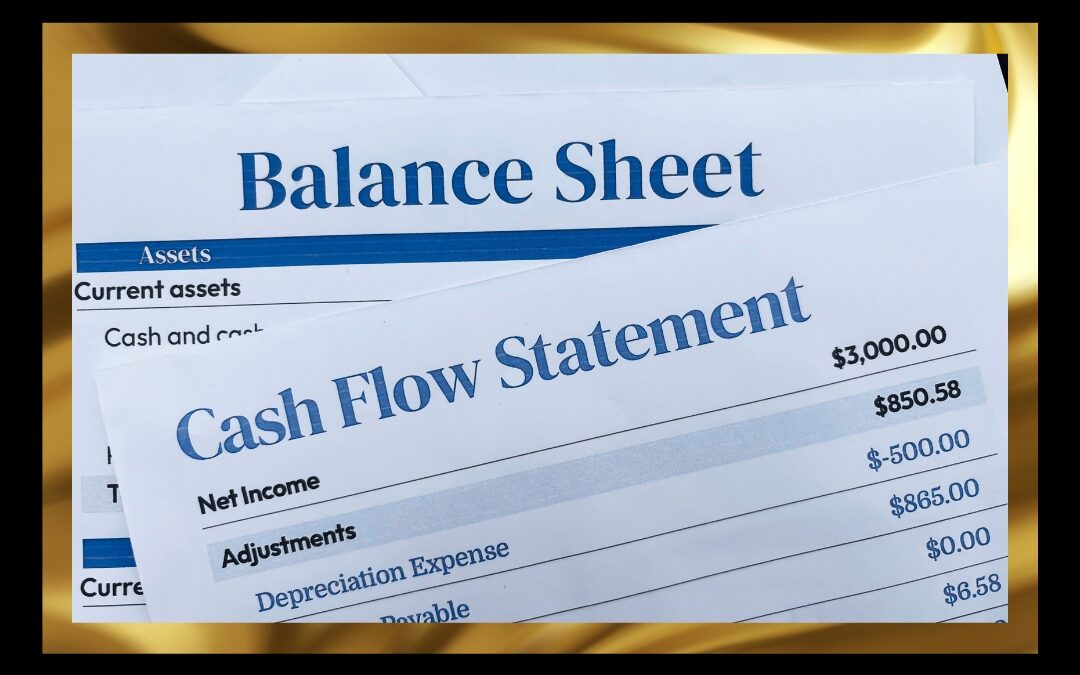
A cash flow statement shows when money enters and leaves your business.
Seasonal planning helps businesses prepare for quiet trading periods.
Rolling forecasts allow business owners to adjust financial plans regularly.
Building a financial buffer helps manage unexpected costs or late payments.
The goal of forecasting is predictability, not perfection.
Why Cash Flow Planning Matters
Cash flow management is one of the most important skills for business owners.
Guidance from business.gov.au supports this. The Australian Government’s business resource hub explains that a cash flow statement helps businesses identify payment cycles, seasonal trends, and upcoming financial commitments.
It also helps predict shortages and plan ahead for expenses.
In practical terms, this means you can prepare for:
BAS obligations
superannuation payments
payroll runs
supplier invoices
equipment purchases
quieter trading periods
Without planning, these expenses often arrive at the worst possible moment.
With forecasting, they become expected checkpoints.
In terms of digging for gold, you do not dig randomly. You survey the terrain first.
Understanding the Difference Between Profit and Cash
Many business owners assume profit and cash are the same thing. They are not.
Profit measures how much money your business earns after expenses.
Cash flow measures when money actually moves in and out of the business.
A business can be profitable while still experiencing cash shortages.
For example:
A business invoices $40,000 in services.
Customers have 30-day payment terms.
Payroll and rent must be paid immediately.
Even though the business has earned revenue, the cash has not arrived yet.
business.gov.au explains that profit and loss statements measure profitability, while cash flow statements track the movement of money in and out of the business.
Understanding this difference is critical for avoiding financial stress.
Late Payments Are a Real Cash Flow Risk
One of the biggest causes of cash flow pressure is late customer payments.
Research from Xero’s Small Business Insights found that late payments cost Australian small businesses $1.1 billion per year, based on 2021 data.
Even healthy businesses can experience cash shortages if invoices are paid later than expected.
This is why cash flow forecasting focuses on timing, not just income.
Six Practical Steps to Stabilise Your Cash Flow
Once you understand where cash flow pressure comes from, the next step is putting simple systems in place to manage it. The following six steps provide a practical framework for improving financial visibility, planning ahead, and reducing the stress that often appears around BAS, payroll, or major expenses. Think of these steps as the groundwork of your financial mine site. When the foundations are strong, the rest of the operation runs far more smoothly.
Step One: Create Short-Term Cash Flow Visibility
The first step in improving cash flow stability is understanding what the next few months look like financially.
A short-term forecast can help answer three essential questions:
What money is expected to come in?
What expenses must be paid?
When will financial pressure points occur?
List expected income from:
invoices
recurring customers
service contracts
subscription income
Then list predictable expenses, including:
wages
superannuation
rent
loan repayments
BAS obligations
supplier payments
The goal is simple: see financial challenges before they happen.
Instead of reacting to shortages, you can prepare for them.
In mining terms, this is like mapping the rock layers before drilling.
That is why many businesses use rolling cash flow forecasts.
A rolling forecast is regularly updated as new financial data becomes available.
Each month you:
review the previous month’s results
adjust expected income and expenses
extend the forecast further into the future
This keeps financial planning realistic and responsive.
It also helps business owners make confident decisions about hiring, investing, or expanding.
Step Three: Plan for Seasonal Changes
Most businesses experience seasonal income patterns.
Retail businesses may slow after the holiday period.
Trades may see quieter winter months.
Professional service firms often experience strong demand around tax time.
business.gov.au guidance confirms that cash flow statements help identify seasonal trends and prepare for quieter periods.
Seasonal planning involves reviewing past financial data to understand patterns.
If you know revenue dips during certain months, you can prepare by:
building reserves during stronger periods
scheduling major purchases carefully
adjusting staffing or operating costs
Instead of being caught off guard, you follow the financial patterns already visible in your business.
Step Four: Identify Financial Pressure Points Early
Certain financial events regularly place pressure on cash flow.
Common pressure points include:
BAS payments
superannuation deadlines
large supplier invoices
equipment purchases
payroll cycles
Without planning, these events often collide.
Forecasting highlights these moments well in advance.
Once visible, you can respond early by:
encouraging faster customer payments
negotiating supplier payment terms
spreading large purchases across months
setting aside funds gradually
Small adjustments today can prevent significant stress later.
Step Five: Build a Cash Buffer
Even the best forecasts cannot predict every situation.
Unexpected expenses, delayed payments, or sudden market changes can still occur.
This is why many financial advisers recommend maintaining a cash reserve or buffer.
The ideal buffer varies for every business and depends on operating costs, income volatility, and industry risks.
A financial buffer helps businesses manage events such as:
late customer payments
equipment failures
unexpected repairs
sudden drops in sales
Instead of creating panic, these situations become manageable.
Think of a buffer as a safety tunnel in your mining operation.
If the main path collapses, you still have another way out.
Step Six: Align Budgeting With Cash Flow
Budgeting and cash flow planning work best together.
A budget sets your financial goals.
Cash flow planning ensures your business has the money available to achieve them.
For example, your business may plan to:
hire additional staff
invest in new equipment
increase marketing spend
A cash flow forecast ensures those investments happen at the right time.
This balance between ambition and timing helps businesses grow sustainably.
Important Note on Upcoming Change: Payday Super
Cash flow planning will become even more important for employers in the near future.
From 1 July 2026, the Australian Government plans to introduce Payday Super, requiring employers to pay superannuation at the same time as salary and wages.
The ATO advises businesses to begin preparing early because the change may affect cash flow management.
For many businesses, this will increase the importance of accurate forecasting and financial planning.
How Technology Supports Cash Flow Management
Modern accounting software has made cash flow forecasting easier than ever.
Platforms such as Xero allow businesses to:
track incoming invoices
monitor outstanding payments
review upcoming expenses
generate financial reports quickly
These tools improve visibility, but the real value comes from interpreting the numbers.
Cash flow data is only useful if it informs decisions.
The Real Benefit: Reduced Financial Stress
Many business owners experience financial anxiety during predictable events like BAS or payroll week.
This stress usually comes from uncertainty.
Cash flow planning replaces uncertainty with clarity.
When the numbers are visible, financial decisions become easier.
Bills become scheduled events rather than surprises.
Growth becomes more manageable.
Most importantly, business owners gain confidence in their financial direction.
Predictability Matters More Than Perfection
Some business owners avoid forecasting because they believe predictions must be perfectly accurate.
That is not the goal.
Forecasting simply provides guidance and early warning signals.
Even a rough forecast can reveal:
future cash shortages
upcoming financial pressure points
opportunities to invest or grow
In gold mining terms, you do not need a perfect map to find gold.
You simply need a better map than yesterday.
Building Strong Financial Foundations
This article forms part of the From Groundwork to Gold1 business success series.
This first of four stages focuses on building financial clarity and control.
Without strong foundations, scaling a business becomes risky.
Cash flow planning is one of the most powerful tools available to business owners.
It removes financial surprises. It improves decision-making.
And it creates the stability required for growth.
When cash flow becomes predictable, business owners gain something more valuable than profit.
They gain peace of mind.
Ready to Strengthen Your Cash Flow?
Running a business should not feel like digging blindly for gold.
With the right financial planning systems, you can clearly see where opportunities and risks exist.
At DJ Grigg Financial, we help business owners build practical cash flow forecasting systems that reduce stress and improve financial clarity.
If you want greater confidence in your business finances, start with a conversation.
Find out more about DJ Grigg Financial’s Business Transformation Journey and begin laying the financial foundations for long-term success.
Business Success Series: From Groundwork to Gold Mini-Series 1: Lay the Foundations – Financial Control Without the Stress↩︎
Understanding Profit, Cash Flow and the Balance Sheet
Many business owners review their financial reports each month. But many quietly admit something uncomfortable. They look at the numbers and still feel unsure what they mean. If that sounds familiar, you are not alone.
Financial reports are often presented in technical language. Without clear explanation, the numbers feel confusing rather than helpful.
Yet those reports are your business scoreboard.
Just like a scoreboard in sport, your financial reports tell you three critical things:
How your business performed
Where you stand financially today
What resources you still have available
Three reports form this scoreboard:
The Profit and Loss Statement
The Cash Flow Statement
The Balance Sheet
Understanding these reports brings clarity. It helps remove nasty surprises and gives you greater control over your business.
Key Takeaways
Financial reports act as the scoreboard for your business performance.
The Profit and Loss Statement shows whether your business made a profit during a period.
The Cash Flow Statement shows where money entered and left your bank account.
The Balance Sheet shows what the business owns and owes at a specific date.
A business can appear profitable but still struggle with cash flow.
Understanding these reports helps business owners spot risks early and make informed decisions.
Why Understanding Your Financial Reports Matters
Running a business without understanding your financial reports is like exploring a goldfield without a map.
You may discover success.
But you may also run into problems you never saw coming.
According to the Australian Bureau of Statistics, more than 2.7 million businesses operate in Australia, with new businesses starting and others exiting each year. Financial awareness helps businesses navigate this changing environment with confidence.
Government guidance consistently stresses the importance of monitoring financial performance.
For example, business.gov.au recommends regularly reviewing your financial statements to identify trends, low margins, debt levels and cash flow pressure.
When owners understand their numbers, they can make better decisions and avoid unexpected financial stress.
The Profit and Loss Statement: Measuring Business Performance
The Profit and Loss Statement (P&L) measures your business performance over a period of time.
It answers one simple question:
Did the business make money during this period?
According to business.gov.au, a profit and loss statement shows income, expenses and the resulting profit or loss over a specific time frame.
The formula is simple.
Income – Expenses = Profit (or Loss)
What the Profit and Loss Statement Shows
Your P&L helps answer important questions:
Are sales growing or declining?
Are expenses increasing too quickly?
Are products or services priced correctly?
Are overheads under control?
Think of the P&L as the performance report for your gold mine.
It shows whether the work you are doing is actually producing value.
But there is an important limitation.
Profit does not always equal cash in the bank.
The Profit Trap: Why Profit Does Not Always Mean Cash
Many business owners assume that profit automatically means money in the bank.
In reality, the two can be very different.
A business may record strong sales but still experience cash shortages.
This happens when money is tied up in:
unpaid customer invoices
inventory or stock
loan repayments
tax obligations
The Australian Taxation Office emphasises that managing cash flow helps businesses ensure they have enough money available to pay bills, wages and tax obligations when they fall due.
For example, a business might record a large sale today.
But if the customer pays in 60 days, the cash is not available immediately.
That is why the Cash Flow Statement is so important.
The Cash Flow Statement: Tracking the Movement of Money
The Cash Flow Statement shows where money flows into and out of your business.
It answers this question:
Where did the money actually go?
According to business.gov.au, a cash flow statement tracks cash movements and helps businesses forecast shortages or surpluses.
This report includes:
cash received from customers
payments to suppliers
wages and operating expenses
loan repayments
tax payments
equipment purchases
Think of the cash flow statement as the trail of gold coins moving through your business.
While the P&L measures profitability, the cash flow statement measures financial stability.
The “Busy but Broke” Problem
Many growing businesses experience a frustrating cycle.
Sales increase.
Work becomes busier.
Staff numbers grow.
Expenses rise.
Yet the bank balance remains tight.
This situation is often called “busy but broke.”
It occurs when sales grow faster than cash collections.
Slow-paying customers, rising costs, or large purchases can quickly reduce available cash.
Monitoring cash flow helps owners identify problems early and take action before financial pressure builds.
The Balance Sheet: Your Business Wealth Snapshot
The Balance Sheet provides a snapshot of your business at a specific moment.
It answers a different question:
What does the business own, and what does it owe?
According to business.gov.au, a balance sheet summarises assets, liabilities and equity to show the financial position of a business.
The balance sheet follows one simple equation.
Assets = Liabilities + Equity
What the Business Owns = Assets
Assets represent things of value owned by the business.
Examples include:
cash in the bank
equipment and vehicles
inventory
money owed by customers
These assets are the resources used to generate revenue.
Liabilities: What the Business Owes
Liabilities are financial obligations.
Common examples include:
business loans
supplier bills
unpaid tax obligations
wages payable
Liabilities are normal in business, but high debt levels increase financial risk.
Equity: The Owner’s Stake
Equity represents the owner’s share in the business.
It reflects what would remain if all debts were paid.
Equity grows when the business earns profit and retains those earnings.
Equity falls when losses occur or when owners withdraw significant funds.
The balance sheet therefore provides a clear picture of the financial strength and stability of the business.
How These Three Reports Work Together
Each financial report answers a different question.
Together, they form the complete business scoreboard.
Profit and Loss Statement
Shows whether the business generated profit over time.
Cash Flow Statement
Shows how cash moved through the business.
Balance Sheet
Shows the financial position at a specific point in time.
Changes in one report often affect the others.
For example:
Profit increases equity on the balance sheet.
Purchasing equipment reduces cash but increases assets.
Taking out a loan increases both cash and liabilities.
Understanding how these reports interact helps business owners make smarter financial decisions.
Turning Financial Reports into Business Insight
Financial reports are not just historical records.
They are decision-making tools.
Guidance from business.gov.au recommends reviewing financial statements regularly to identify unusual trends, rising costs, or cash flow pressure.
Once business owners understand their financial scoreboard, they can answer critical questions such as:
Can we afford to hire another employee?
Is our pricing covering our costs?
Are customers paying too slowly?
Is the business carrying too much debt?
Clear financial information turns guesswork into informed decision-making.
Laying the Groundwork for Future Growth
Understanding profit, cash flow and the balance sheet is the first step toward financial control.
Without this foundation, it is difficult to measure performance or plan for growth.
This article forms the starting point for the From Groundwork to Gold1 business success series.
Future articles will explore:
the most important financial KPIs for business owners
how to identify early warning signs in your numbers
how to forecast future cash flow
how to use financial data to scale your business
But before building the next stage, every successful business needs solid foundations.
Understanding your scoreboard provides exactly that.
Ready to Gain Clarity Over Your Numbers?
Many business owners feel uncertain when reviewing financial reports.
That uncertainty is completely normal.
Financial reports are powerful tools, but only when they are explained clearly.
We help business owners turn financial reports into clear, practical insights that support better decisions.
If you want to remove financial guesswork and gain confidence in your numbers, we would love to help.
Learn more about DJ Grigg Financial’s Business Transformation Journey today and start building stronger financial foundations for your business.
Business Success Series: From Groundwork to Gold Mini-Series 1: Lay the Foundations – Financial Control Without the Stress↩︎
Understanding the Real Difference Between Mark-Up and Gross Profit Percentage
Pricing is one of the most powerful drivers of business success. Yet many Australian business owners unknowingly get it wrong.
The confusion usually comes down to two similar-sounding terms: mark-up percentage and gross profit percentage.
They are not the same. Using them incorrectly can quietly erode your profits.
This article breaks it down clearly, using practical examples and trusted sources, so your pricing strategy is built on solid ground.
Key Takeaways
Mark-up percentage is based on cost and is used to set selling prices
Gross profit percentage is based on sales and measures profitability
A 50% mark-up equals a 33.33% gross profit, not 50%
Using the wrong percentage can lead to underpricing and reduced cash flow
The ATO measures business performance using ratios based on turnover, not cost
What Is the Difference Between Mark-Up and Gross Profit?
Mark-up is the percentage added to the cost price to calculate the selling price. Gross profit percentage is the percentage of each sale that is profit after costs.
Mark-up helps you set prices. Gross profit helps you measure performance.
Why Getting This Right Matters
Pricing is not just about covering costs. It directly impacts:
Cash flow
Profit margins
Business sustainability
The Australian Taxation Office (ATO) uses financial ratios to assess business performance. These ratios are based on turnover (sales), not cost.
This reinforces a critical point: Profitability is measured against sales, not cost.
If your pricing is based on the wrong calculation, your reported performance may not reflect reality.
Understanding Mark-Up Percentage
Mark-up is how much you add to your cost price to determine your selling price.
It answers the question: “How much should I add to my costs to make a profit?”
Example
Cost of goods: $100
Mark-up: 50%
Selling price: $150
You added $50 to your cost.
Think of mark-up as adding a layer of gold to your base metal. It determines your selling price.
Understanding Gross Profit Percentage
Gross profit percentage measures how much profit you make from each dollar of sales.
It answers the question: “How much of my revenue is profit?”
Using the Same Example
Sales: $150
Cost of goods: $100
Gross profit: $50
Gross profit percentage = $50 ÷ $150 = 33.33%
Why These Two Are Not the Same
The difference comes down to the base number used:
Metric
Based On
Purpose
Mark-Up %
Cost
Setting prices
Gross Profit %
Sales
Measuring profit
This difference may seem small. It is not.
It creates a gap that can significantly affect your pricing and margins.
The Common Pricing Mistake (And Why It’s Costly)
Many business owners try to achieve a target gross profit by simply adding that percentage to cost.
This does not work.
Incorrect Approach
Cost: $100
Add 33% → Selling price: $133
Actual Result
Gross profit: $33
Gross profit percentage: 24.8%
You aimed for 33%, but achieved less than 25%.
Over time, this gap can severely reduce profitability.
How to Convert Gross Profit to Mark-Up (The Right Way)
To price correctly, you must convert your target margin into a mark-up.
Markup=1−Gross ProfitGross Profit
This formula ensures your pricing aligns with your desired profit outcome.
Example
If your target gross profit is 33%:
Mark-up = 33% ÷ (1 − 33%)
Mark-up ≈ 50%
This means you must apply a 50% mark-up to achieve a 33% gross profit.
This conversion is essential for accurate pricing.
ATO Perspective: Why This Matters for Compliance and Benchmarking
The ATO uses industry benchmarks to compare business performance.
These benchmarks rely on ratios such as:
Cost of sales to turnover
Gross profit to turnover
Because these ratios are based on sales, not cost:
Your reported margins must align with correct calculations
Incorrect pricing can lead to misleading financial results
This can affect:
Business decision-making
Tax reporting accuracy
ATO benchmarking comparisons
Real-World Insight: How This Mistake Shows Up
In our experience working with business owners, this error is more common than expected.
A client once noticed strong sales but declining bank balances.
They suspected theft.
The real issue was pricing.
They were applying a gross profit percentage to cost instead of using mark-up.
Once corrected, profitability improved almost immediately.
This example highlights how easily this mistake can occur—and how costly it can be.
Expert Insight: Pricing Drives Profit
As pricing expert Hermann Simon explains:
“Price is the most powerful profit driver in business.”
Even small pricing errors can have a significant impact on profit.
Getting your calculations right is one of the simplest ways to improve financial performance.
A Simple Pricing Framework for Business Owners
To avoid costly errors, follow this structured approach:
1. Understand Your True Costs
Include all direct and indirect costs.
2. Set a Target Gross Profit
Determine the margin required for sustainability.
3. Convert Margin to Mark-Up
Use the correct formula to ensure accurate pricing.
4. Validate Against the Market
Ensure your pricing remains competitive.
5. Review Regularly
Costs and market conditions change over time.
Industries Most at Risk of This Mistake
This confusion is especially common in:
Retail businesses
Hairdressers and barbers
Hospitality venues
Trades and construction
Product-based service businesses
In these industries, pricing errors compound quickly due to volume.
Warning Signs Your Pricing Needs Review
Look out for these red flags:
Strong revenue but weak cash flow
Profit margins lower than expected
Difficulty covering overheads
Prices that feel “tight” despite good sales
These are often signs of incorrect mark-up or margin use.
Turning Pricing Into a Competitive Advantage
Understanding the difference between mark-up and gross profit is more than technical knowledge.
It is a strategic advantage.
When your pricing is accurate:
Your margins improve
Your cash flow stabilises
Your decision-making becomes clearer
It is the difference between guessing and operating with confidence.
Final Thoughts: Build Your Business on Solid Foundations
Pricing mistakes rarely show immediate damage.
But over time, they can quietly erode profitability.
By understanding the difference between mark-up and gross profit:
You protect your margins
You align with ATO benchmarking expectations
You build a stronger, more resilient business
Think of it as refining raw gold. Without the right process, the value is lost.
Ready to Get Your Pricing Right?
If you are unsure whether your pricing is working as it should, now is the time to act.
At DJ Grigg Financial, we help business owners implement clear, reliable pricing systems.
Contact us today to review your pricing strategy and ensure your profits are truly golden.
ATO Scams Are Rising: How to Protect Yourself Using the ATO App
What Is an ATO Scam?
An ATO scam occurs when a fraudster impersonates the Australian Taxation Office to steal money or personal information.
These scams commonly involve phone calls, SMS messages, emails, or fake websites that appear legitimate.
The ATO confirms scammers use multiple channels to impersonate them.
Key Takeaways
ATO impersonation scams are increasing across Australia, especially during tax time.
Scammers contact victims via phone, SMS, email, and fake websites.
The ATO does contact taxpayers, but you should always verify unexpected contact.
The ATO app includes a “Verify Call” feature to confirm legitimate ATO calls in real time.
The ATO will never send unsolicited links to log in or demand urgent payment.
Using the ATO app and myID helps protect your identity and financial position.
The Modern Gold Rush—And You’re the Target
In today’s digital economy, scammers are chasing a different kind of gold—your identity and your money.
ATO impersonation scams have become more frequent and more convincing. The ATO regularly warns that scammers are refining their tactics and targeting Australians year-round.
In one recent update, thousands of impersonation scams were reported in a single month
Across Australia, scam losses reached tens of millions of dollars annually, according to ACCC Scamwatch data
The message is clear: this is not a rare event—it’s a growing risk.
How ATO Scams Work
ATO scams are effective because they feel urgent and official.
Common tactics include:
Threats of arrest or legal action
Claims of unpaid tax debts
Fake tax refund offers
Requests for payment via unusual methods
Links to fake myGov or ATO login pages
The ATO explicitly warns that scammers impersonate them through:
Phone calls
Emails
SMS messages
Social media
Fake websites
Why Even Smart People Get Caught
Scams are not about intelligence—they are about timing and pressure.
Fraudsters create urgency to override rational thinking.